
How Institutional Investors Changed Housing—and Why the Tide Might Be Turning
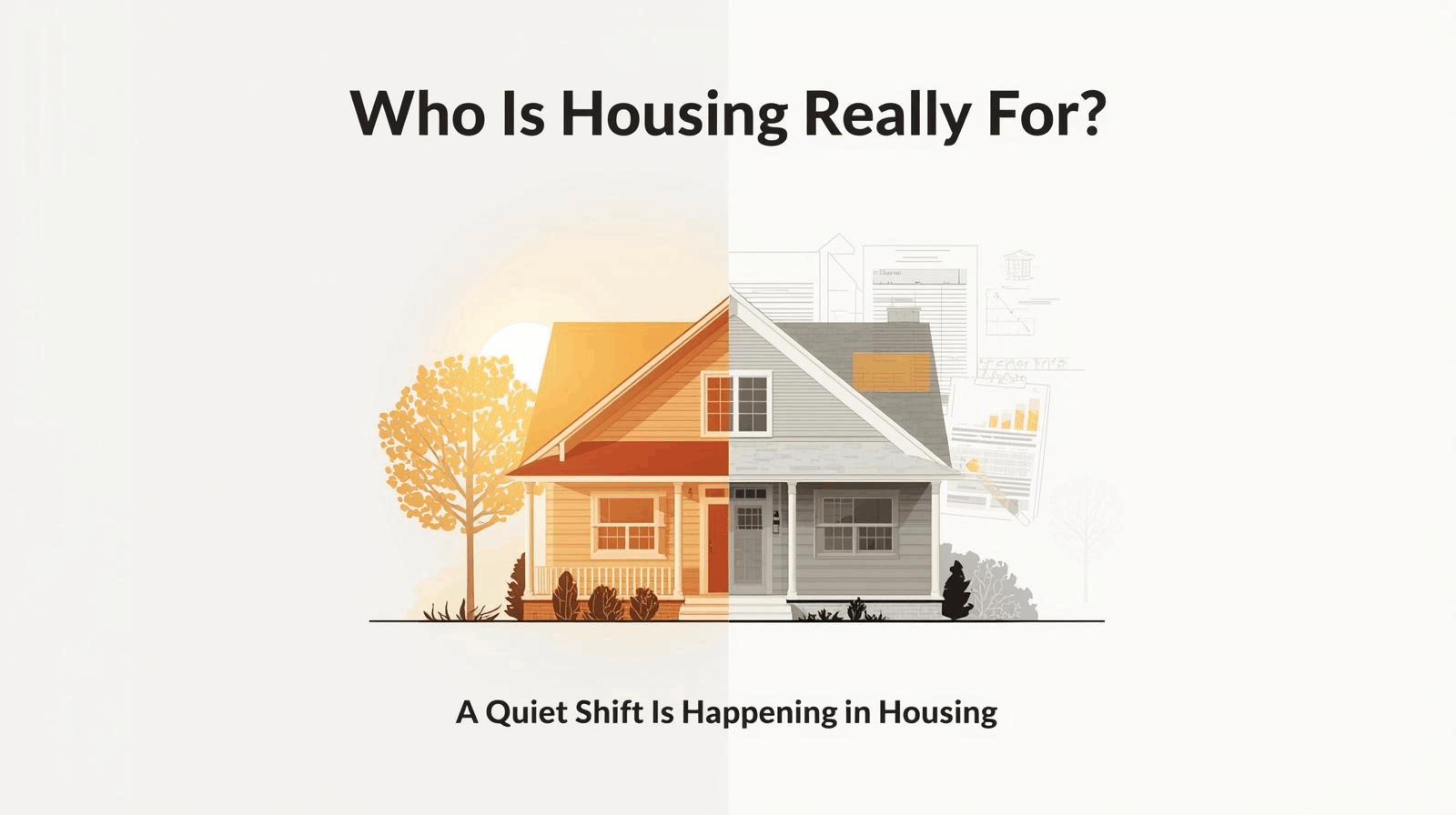
Picture a first-time buyer in Columbus. They’ve done the work. Saved the money. Cleaned up their credit. Asked smart questions. They finally find the house. Nothing flashy. Just solid. Livable. A place to start.
They write a clean offer.
And then—gone.
Not to another family. Not to a local investor fixing up a rental. But to a company with a spreadsheet, a cash reserve larger than most towns, and no intention of ever living there.
For years, we’ve told ourselves that was just “the market.”
But markets are supposed to circulate. When participation narrows, something breaks. Capital stops moving through communities and starts stacking in places you can’t see. Homes stop being homes first and become inventory. Neighborhoods turn into line items. And people who did everything right still lose—not because they were reckless, but because they weren’t built to compete with machines.
That’s what happened in housing.
Large institutional investors didn’t simply enter the single-family market. They overwhelmed it. They paid cash, waived everything, moved faster than any human could, and held property indefinitely because they could. Not because the homes were better—but because scale was.
Families and small investors weren’t losing on merit. They were being crowded out.
Now something unusual is happening. There’s growing discussion—at the highest levels—about putting guardrails back in place. Donald Trump has signaled an executive push to ban large institutional investors from purchasing additional single-family homes. Not small landlords. Not local builders. Not families buying their first place. The focus is squarely on large, institutional-scale buyers.
What makes this moment different is that the idea doesn’t stop on one side of the aisle. Similar legislation has already been introduced by Democratic and Independent senators, with support from both parties. That matters—not because of politics, but because bipartisan overlap usually means the issue itself has become impossible to ignore.
And here’s where people get uncomfortable, because they hear the word redistribution and imagine something being taken from someone else.
But nothing is being handed out here.
What’s being redistributed is access.
No one is guaranteed a house. No one is promised profit. The door is simply no longer blocked by a semi-truck. The market doesn’t disappear—it starts functioning again.
This isn’t capitalism being dismantled. It’s capitalism being corrected. True markets require competition. And competition can’t exist when one class of buyer can outbid endlessly, absorb losses indefinitely, and operate without human constraints. That isn’t a free market—it’s consolidation.
Housing is different. It always has been. Single-family homes aren’t just assets. They anchor families, stabilize neighborhoods, and serve as the on-ramp to long-term wealth. When that ladder is pulled away, the system stops renewing itself.
Here in Columbus, the effects would be real. This city became a target for institutional buyers because it’s steady, growing, affordable by comparison, and filled with real demand. If even part of that institutional pressure eases, the shift wouldn’t be dramatic—but it would be meaningful. First-time buyers would stop competing with algorithms. Small investors could access entry-level properties again. Ownership would stay local longer. Neighborhoods would breathe.
Prices wouldn’t collapse. They’d normalize. Appreciation wouldn’t vanish. It would slow into something sustainable. Builders, lenders, contractors, appraisers, and local businesses would still thrive—because the money doesn’t disappear. It moves differently. It circulates instead of extracting upward.
That’s the quiet part most people miss.
Markets only stay free when power is dispersed. When ownership concentrates, freedom shrinks—slowly, legally, and politely.
This moment isn’t about politics or punishment. It’s about whether housing continues down a path of consolidation or returns to something more balanced. Less Wall Street. More Main Street. More families. More local investors. More stability.
Not anti-capitalism.
Maintenance.
And if we get it right, people won’t remember the policy details. They’ll just remember that buying a home finally felt possible again.
Recent Posts






GET MORE INFORMATION